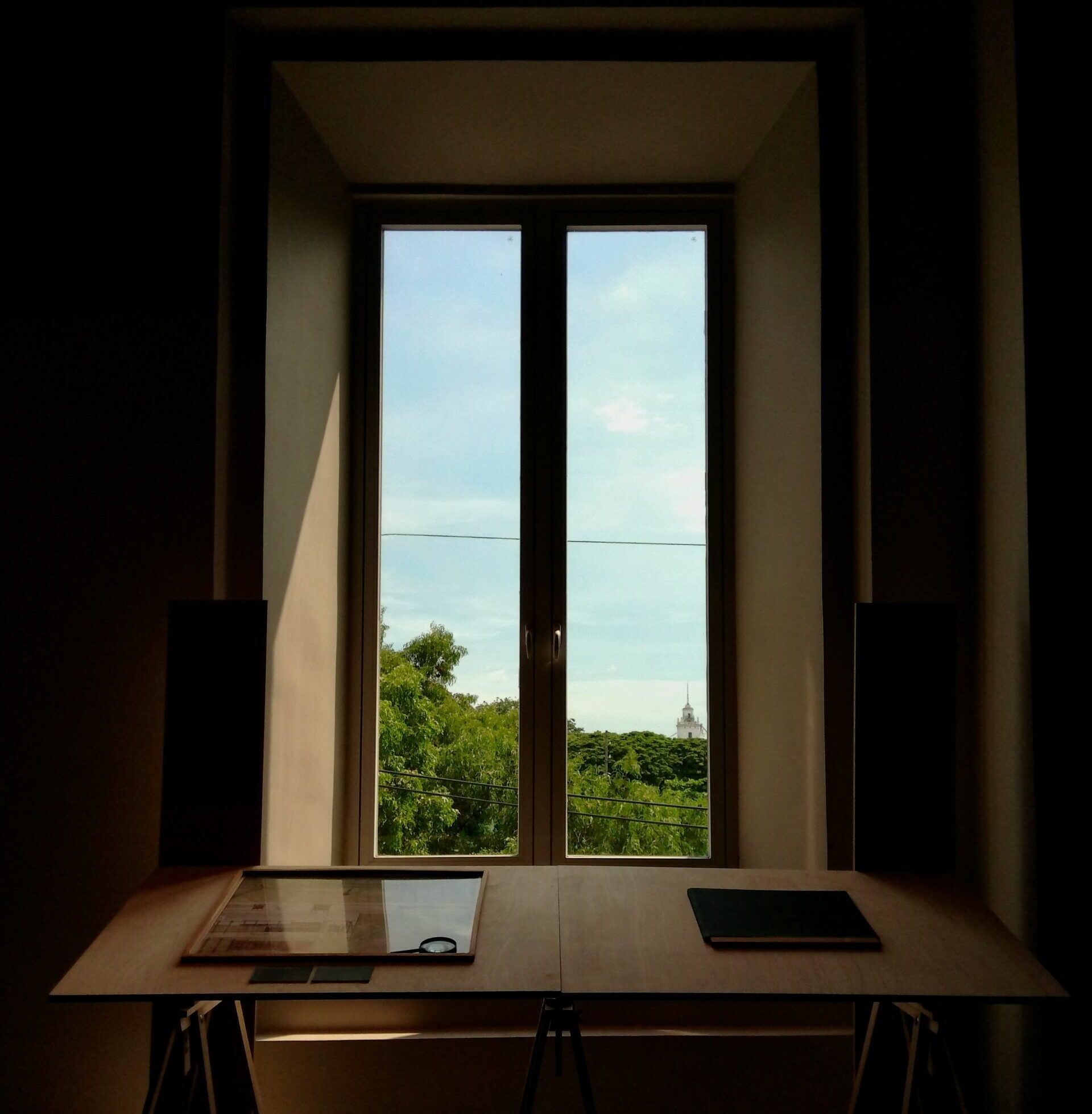
There’s a version of “successful architect” that gets handed to you before you even finish school. You know the one. Black turtleneck, permanently under-slept, still at the desk at 11pm because a “real” architect never clocks out. Vacation is something other people do. Hobbies are a distraction from the Work. If you’re not exhausted, are you even trying?
So many memes and posts are out there normalizing the idea that architects never go outside, that we don’t attend events because we’re busy solving the world’s problems, and that we’re no fun at parties because we’re busy critiquing the host’s lighting choices.
I bought into that story for a long time and for a while, it even felt true, because the field rewards the appearance of devotion. Show up early (which is the one part of this myth I do believe in), leave late, take the call on Saturday, and people nod approvingly like you’ve passed some kind of test. Nobody ever tells you what the test is actually measuring.
Here’s what I’ve noticed after two decades of this: the architects who seem the most chained to their desks are not, on average, doing the best work. They’re doing the most work. Those are not the same thing.
Where this story comes from
Some of it is architecture school, which has a long, well-documented tradition of treating sleep deprivation as a rite of passage. There’s a certain professional camaraderie that comes with having survived Studio. Some of it is the client-facing nature of the job, where being “always on” gets mistaken for being reliable. And some of it is just the mythology we inherited from a handful of famous names who cultivated the tortured-genius-at-the-drafting-table image because it made good copy. It made for great biographies. It did not make for a healthy relationship with the work.
The trouble is that the mythology outlived the men – and the times – who benefited from it, and now it just floats around as ambient pressure. New architects absorb it before they’ve had a chance to decide if they agree with it. Firm owners repeat it because it was modeled for them.
What actually predicts good work
In my experience, it’s not hours logged. It’s whether you have the bandwidth left to notice things. Good design work requires a kind of attention that burnout actively destroys. You cannot see the client’s actual problem, the one under the one they described in the intitial call, if you are running on fumes. You cannot catch the detail that will cause a headache in month four of construction if your brain has been in triage mode since month one.
The best design decisions I’ve made in my career did not happen at my desk at midnight. They happened on a walk. In the shower. Halfway through a family game of cards my brain quietly solved a problem I’d been stuck on for a week. That is not a coincidence and it is not a fluke. Stepping away is part of the process, not a betrayal of it.
Success that isn’t measured in hours
If the measure of a good architect is how chained you are to your desk, then the profession has quietly agreed that burnout is a feature, not a bug. I don’t think that’s actually what any of us want, if we said it out loud. I think it’s just the story we absorbed without ever agreeing to it.
A better measure might be something like: are you doing work you’re proud of, are your clients well served, and can you sustain this for another twenty years without resenting it? That’s a much harder thing to put on a mood board, but it’s a lot closer to what actually matters.
None of this is a case for laziness or for treating deadlines as optional, because clients and projects deserve real commitment. It’s a case for separating commitment from self-destruction, which somewhere along the way got fused together in this field. They’re not the same thing, and you’re allowed to want both a serious practice and an actual life.
Why this matters to how we build
This isn’t just a personal soapbox for me, it shapes how I think about the tools our profession works with too. A lot of the software built for design professionals seems to assume you’ll be at a desk, tethered, for the long haul. Part of what we’re building at CollabMind comes from a different assumption: that a good day of practicing architecture might include a site walk, a client call from the car, and yes, some actual time away from the screen, without losing track of the project in the process.
You don’t have to be chained to the desk to be good at this. You just have to be paying attention. Those are two very different requirements, and only one of them is sustainable.